 AML Global
 Luxembourg
 Belgium
 Ireland
 Malta
Malta Cayman Islands
 EU Regulations
 Cyber Security
 AML Courses
 Member Organisation 1
 Member Organisation 2
 Non-Profit Organisation

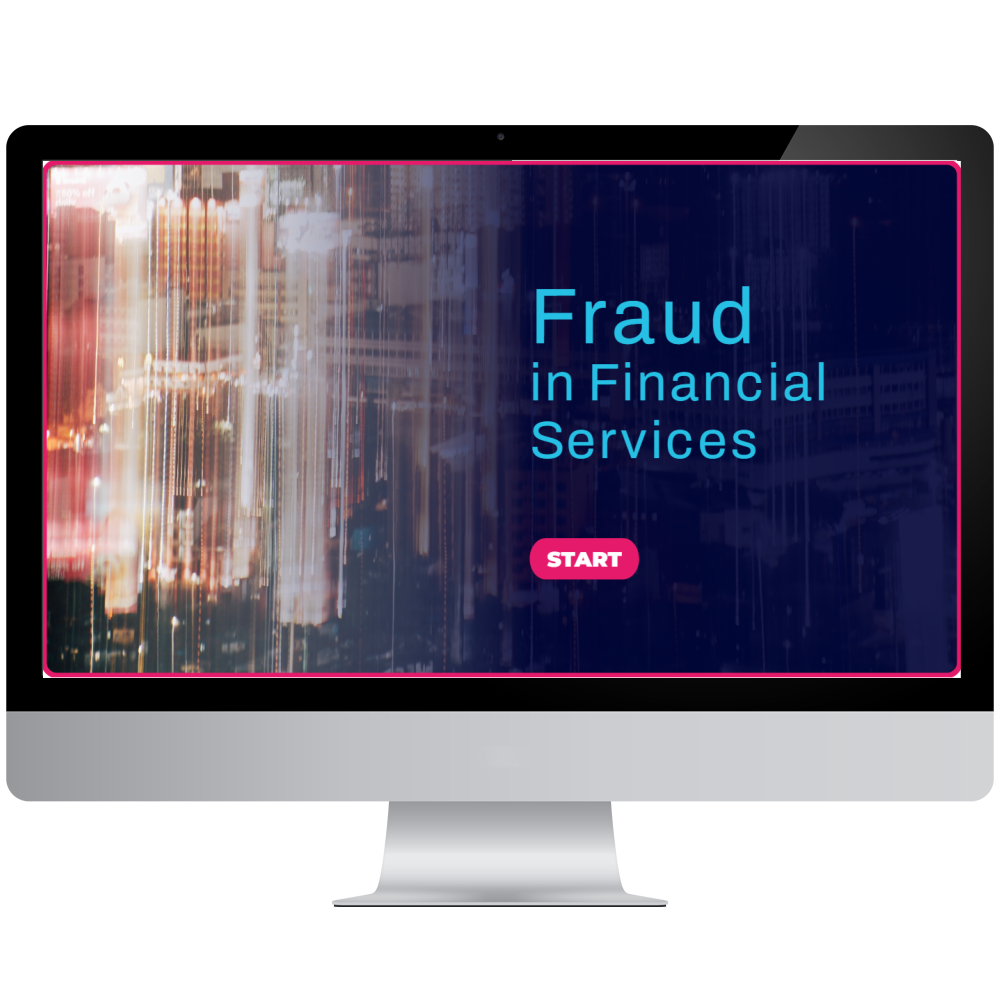
elearning Course: Fraud in Financial Services
€75.00 + Applicable VAT
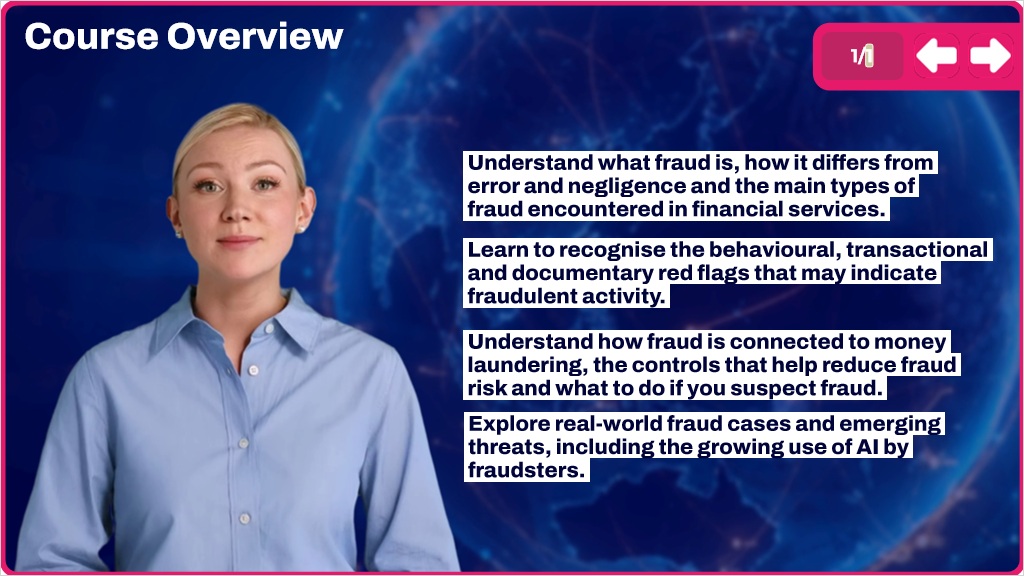
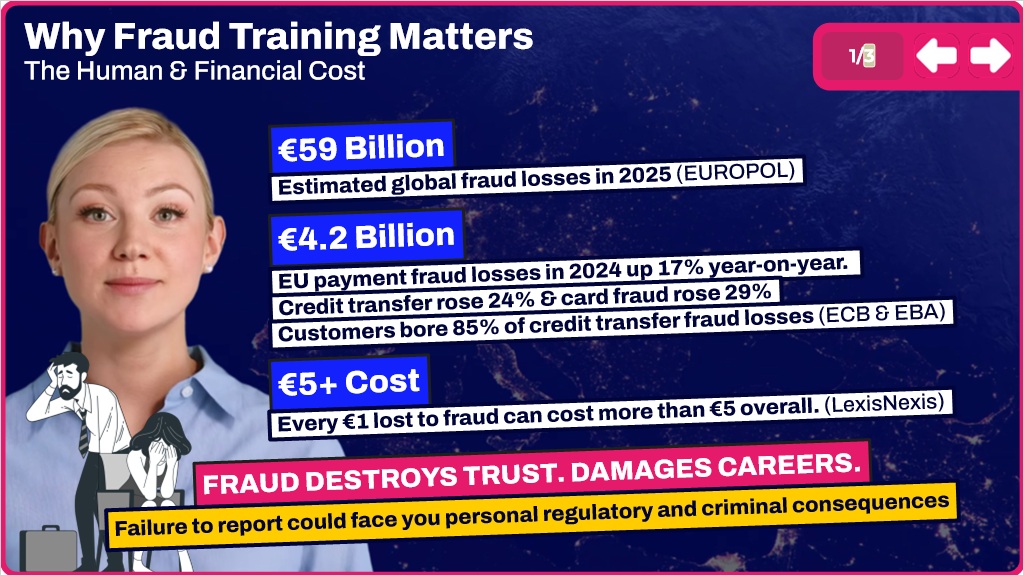
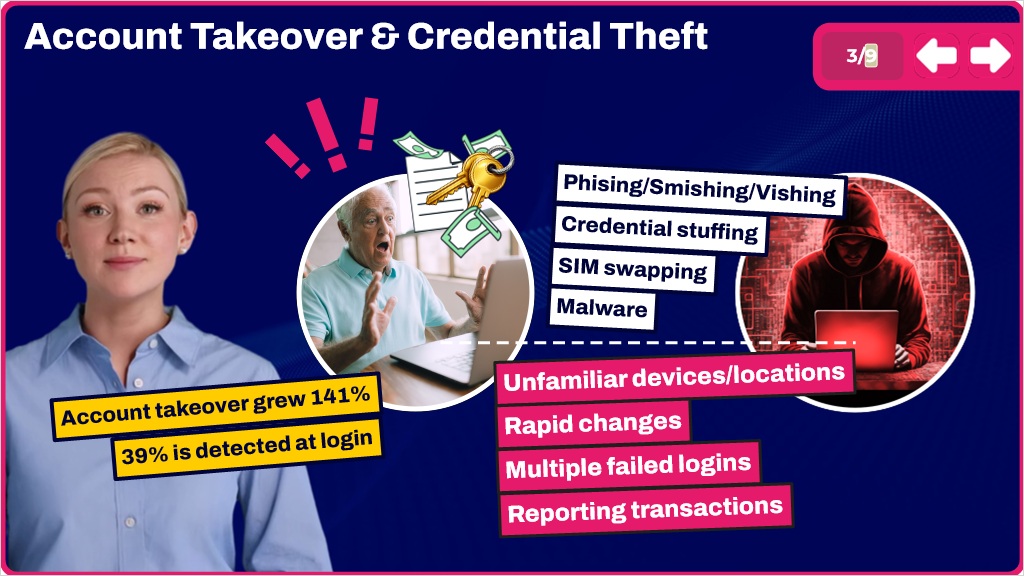
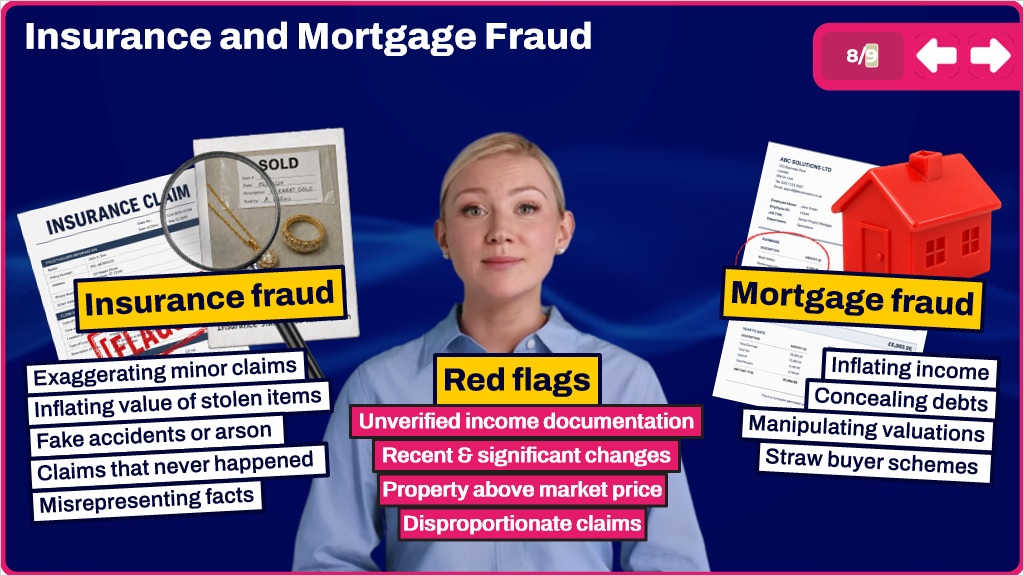
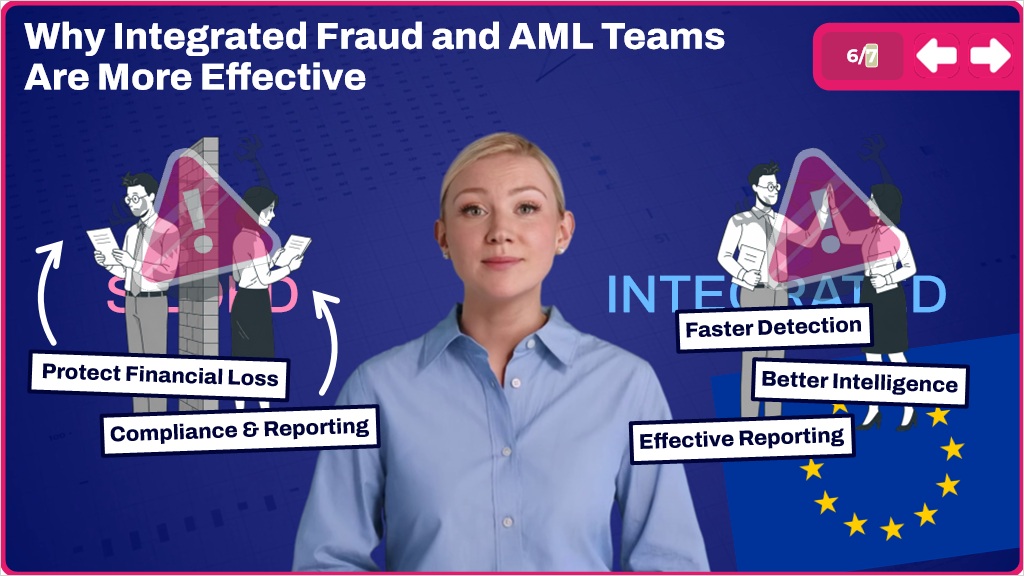
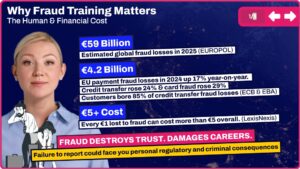
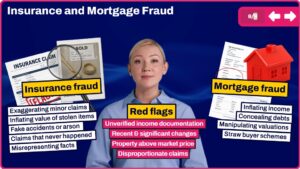
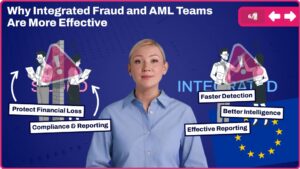
A comprehensive elearning course covering the nature, scale, and types of fraud in financial services; the fraud–money laundering relationship; how fraud is detected and prevented; employee responsibilities and reporting obligations; real-world case studies; and emerging threats including AI-enabled fraud.
This course is now available with instant access.
A comprehensive elearning course covering the nature, scale, and types of fraud in financial services; the fraud–money laundering relationship; how fraud is detected and prevented; employee responsibilities and reporting obligations; real-world case studies; and emerging threats including AI-enabled fraud.
Suitable for staff working in financial services (banking, insurance, investment, payments); compliance and risk professionals; anyone with a role in handling client assets or transactions
Learning Objectives:
By the end of this course, the learner will be able to:
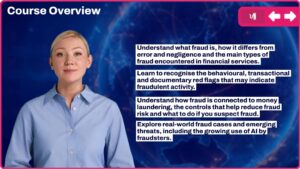
- Define fraud and distinguish it from error and negligence in a financial services context.
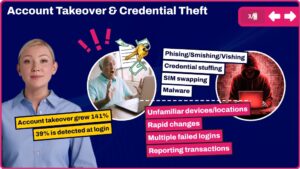
- Identify at least six types of fraud commonly encountered in financial services and describe how each operates.
- Explain the Fraud Triangle (pressure, opportunity, rationalisation) and apply it to workplace scenarios.
- Describe the relationship between fraud and money laundering, including how fraud proceeds are laundered through the financial system.
- Recognise behavioural, transactional, and documentary red flags that may indicate fraudulent activity.
- Outline the key internal controls and prevention strategies that reduce fraud risk in financial institutions.
- State the correct procedure for reporting suspected fraud, including SAR obligations and whistleblower protections.
- Analyse real-world fraud cases to identify the failures in controls and oversight that allowed them to occur.
- Describe emerging fraud threats including AI-enabled fraud, synthetic identity fraud, and real-time payment fraud.
Sections & Modules:
Module 0: Introduction
Section A: Understanding Fraud
Module 1: Why This Matters
Module 2: Defining Fraud — What It Is and What It Isn’t
Module 3: Types of Fraud in Financial Services
Module 4: The Fraud–Money Laundering Connection
Section B: Detection, Prevention & Your Responsibilities
Module 5: Detecting Fraud — Red Flags and Warning Signs
Module 6: Preventing Fraud — Controls and Culture
Module 7: Your Responsibilities — Reporting and Whistleblowing
Module 8: Real-World Case Studies
Module 9: Emerging Threats and Looking Ahead
Module 10: Knowledge Check
Knowledge Check:
There is a 10 question knowledge check at the end of the course with a standard pass mark of 80% and unlimited attempts. The 10 questions are drawn randomly from a larger bank of questions. Each attempt will draw a different mix of questions.
Course Length:
90 minutes + 10 minutes of questions.
Certificate:
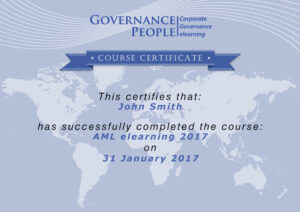
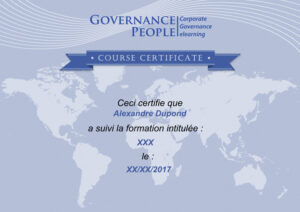
The user will receive a certificate in pdf format upon successful completion of the course and knowledge check.
Licence Information:
Each purchase is for a licence for a single user. The user has access to all the course material for 6 (six) months via our web based elearning platform.
Reporting:
For volume purchasers (offline only), your nominated administrator will be able to download:
- A set of detailed reports in Excel format showing course completion data for all of your users; and
- Copies of all certificates.
Compliance Officer Reviews:
Our courses have been reviewed and approved by over 100 Compliance Officers and deemed appropriate for use by all of their employees. We regularly update the course material as regulations evolve.
Our Feedback (from our range of courses):
“It was a great experience to participate in a professional e-learning course.”
“Good presentation, interactive implementation makes education process more interesting.”
“Very clear and well structured. The examples are excellent!”
Course Customisation (optional):
We can customise this course for your organisation. Customisation can include:
- Branded website and course
- Branded certificates
- Additional material covering your organisation and its AML policy and procedures
| License | Single User (Instant Access), Multi-User (Offline Processing) |
|---|
How to Order
Ordering from our site is very easy !
Online Orders:
Simply add the required courses into your shopping cart and then proceed to the checkout. You can pay by bank transfer or by credit/debit card.
If you pay by bank transfer, we will send your course login instructions once we have received the funds on our account.
If you pay by credit/debit card, we will send your login details as soon as we have setup your account (during normal working hours Monday to Friday). Orders received on weekends and bank holidays will be processed on the next working day.
Offline Orders:
If you prefer to order offline, you can do so as follows:
Send us an email to orders@governancepeople.com and include the following data:
- The name(s) of the course(s) that you wish to order.
- The First Name, Family Name and Email Address of the user(s) for each course.
We will then send you an invoice by email that will allow you to pay for your course by bank transfer or credit / debit card.
Volume Orders
For each course user we need the following information:
- First Name
- Family Name
- Email Address
You can add this information to the order at the checkout or send us a spreadsheet after you have completed your order. The email address to send the file is:
orders@governancepeople.com
Related products